
Middle East Market Sentiment Survey: Equities to Have Highest Total Return in 2015
In the lead up to the 2015 Middle East Investment Conference, to be held in Kuwait on 10 February 2015, CFA Institute conducted its fifth annual Middle East Market Sentiment Survey. From 13 to 22 January 2015, CFA charterholders and CFA Institute members in nine countries across the Middle East were invited to participate in an online survey. The survey received 166 responses, most of which came from the United Arab Emirates (36%), Saudi Arabia (21%), and Kuwait (18%). Many of the respondents were middle level (65%) or seasoned professionals with at least 10 years of work experience (37%). They were asked a number of questions, ranging from what will drive investments to their expectations about the price of oil.
Here are some of the survey highlights:
- Real estate, hospitality, and construction sectors will be main drivers of foreign direct investment (FDI) over the next two years, according to nearly half (47%) of respondents. Following these sectors, 18% of respondents expect energy and only 9% expect transportation to be the main driver of FDI.
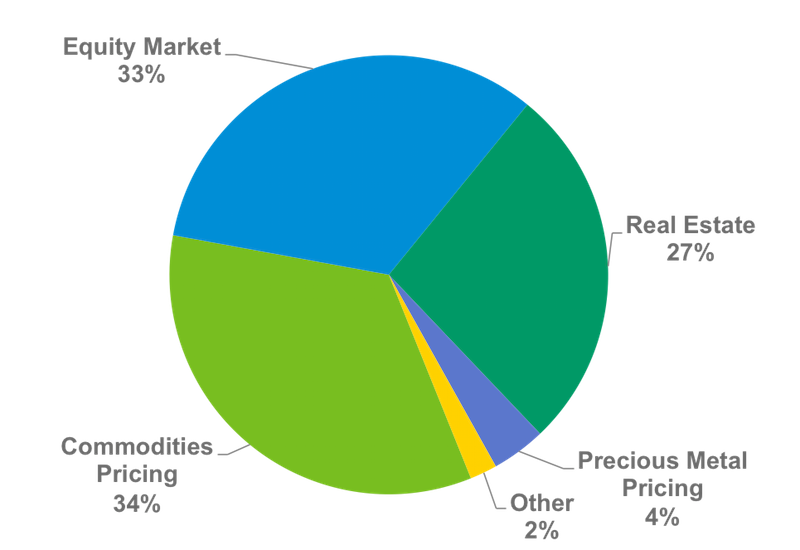
- Fragmented views on the most insightful metric for tracking near-term economic corrections. One-third (34%) of respondents indicated that commodities pricing provides the most insight into potential near-term economic corrections, and another one-third (33%) of respondents believe that equity markets provide the most insight. At the same time, another one-quarter (27%) use real estate as the best indicator of near-term economic corrections.
Which economic metric do you believe provides the most insight into potential near-term economic corrections?
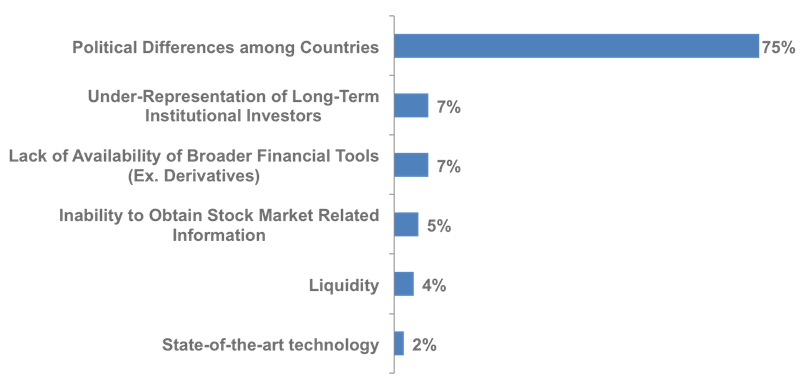
- Political differences are a significant obstacle to the idea of one consolidated regional stock exchange for the GCC. The vast majority of respondents (75%) cite political differences among countries as the most important hurdle for creating one stock exchange that represents all GCC markets.
What is the most significant hurdle for creating one stock exchange that represents all GCC markets?
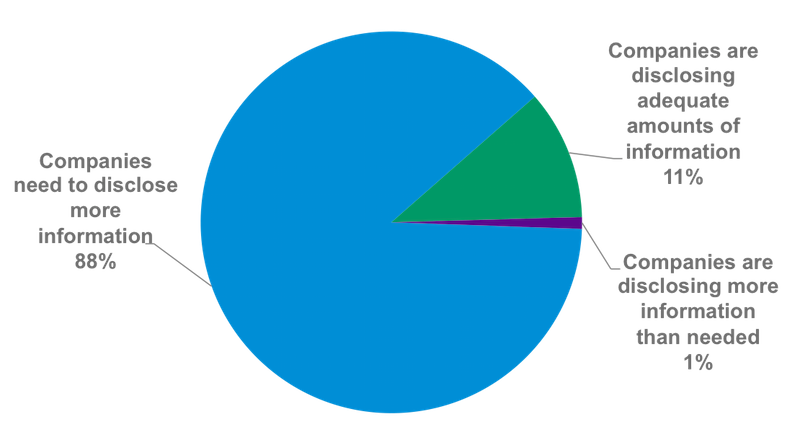
- Increased corporate financial disclosures needed in Kuwait. In Kuwait, the Capital Markets Authority has issued guidelines for proper disclosures by public companies. However, 88% of members surveyed still believe that companies need to disclose more information in order for investors to make informed decisions.
Are companies disclosing enough for investors to make informed investment decisions?
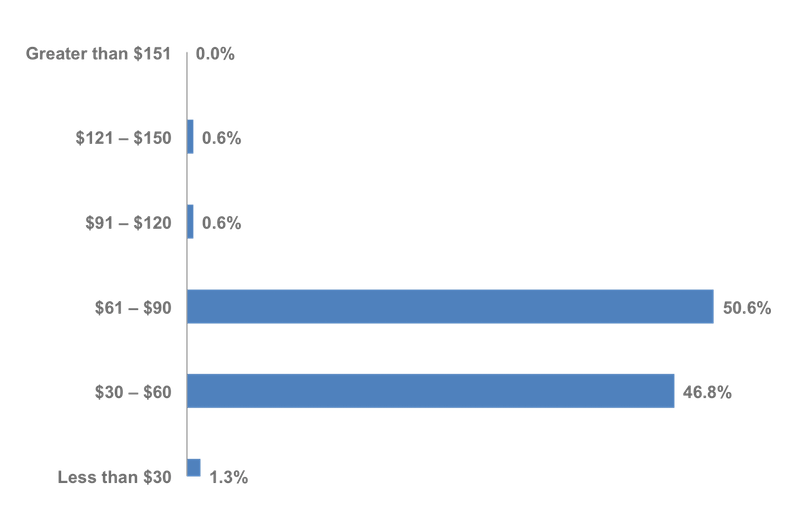
- Expectation that oil prices will go higher than $60. Perhaps the most important question was about the sharp decline in the price of oil. We asked the respondents where they expect the oil price per barrel will be at the end of 2015. More than a third believe that it will be between $30 and $60, but the majority (51%) believes it will be between the $51 and $90.
Where will the oil price per barrel be at the end of 2015?
In addition to informative insights on market expectations, public disclosures are a major theme in this year’s survey results. As a main source of information for analysing listed companies, the majority of financial professionals in the region believe that both governments and companies should increase efforts to create extensive systems for collecting data and disclosing information to facilitate informed decision making by investors.
To hear more debate on the new opportunities open to MENA investors, follow the Middle East Investment Conference blog live from the conference in Kuwait.
