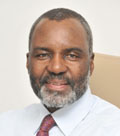
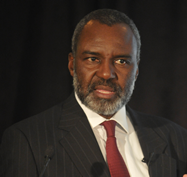
Nkosana Moyo: The Perceived Risks of Africa Create Investment Opportunities

By
Nkosana Moyo

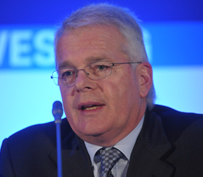
Perceived risks of investing in Africa are higher than the actual risks, and attractive investment opportunities can arise from the ‘negatives’ associated with Africa.

These were the views of Nkosana Moyo, the founder and executive chairman of the Mandela Institute for Development Studies (MINDS), who was speaking to an audience of investment professionals at the Fifth Annual European Investment Conference, held in Prague, 18–19 October 2012.

Moyo explained that the financial markets of the developed world were considered low risk, but the financial crisis that started in 2008 proved otherwise. The 2011 GDP growth rate for Africa, estimated at 5.2%, showed that Africa’s economic growth was recovering from the drop it experienced after 2008, and it was well above the levels seen before 2001. He said that one has to be careful with aggregating data across more than 50 African countries because they are materially different from one other, but such data facilitate discussion on identifying longer-term changes.

Moyo believes that foreign investors who want to assess the risks in Africa should observe what Africans are doing. Investors will see Africans investing in and not divesting from Africa. Similarly, companies operating in Africa since the colonial era are staying in Africa and earning profits, even though these companies prefer not to bring attention to their profitability. Moyo stated that this is not a risk assessment you learn at business school, but it gives you an insight into investing in Africa.
Read More

tagged:

Felix Zulauf: Eurozone on Track to Be the Shortest Currency Union in History

By

Crushing any residual optimism among delegates after Wolfgang Münchau’s cautionary forecast at the Fifth Annual European Investment Conference, Felix Zulauf, president of Zulauf Asset Management AG, highlighted slowing growth in China as a portent to a global economic crisis that will strike every single region. Zulauf indicated that “excessive” booms always lead to a bust, and China’s will be no exception. He stated that recent Chinese growth was actually far closer to 3% than official reports of nearly triple that level. In his view, market commentators underestimate the problems in China; consequently, public growth forecasts for Australia, Latin America, and other natural resource countries are too high. He also believes that the Chinese authorities could implement “timid stimulus” after the coming leadership change but without much effect; in short, a “credit boom in reverse” seems imminent.

Zulauf argued that the U.S. government will find further fiscal stimulus unaffordable, as debt has risen from $10 trillion to $16 trillion and $25 trillion is in sight within four years at this pace. He argued that fiscal restraint is needed, even if at a short-term cost in growth, and added that “Obama has no plan” and that Republican vice presidential candidate Paul Ryan’s plan is “implausible.” Minor fixes are the likeliest case, resulting in economic stagnation. Zulauf’s only good news was that households appear to have completed deleveraging.

The eurozone is on track to be the shortest currency union in history, Zulauf said, with the possibility of federal union the only alternative to breakup. Additional temporary measures risk aggravating social conditions, with local rioting leading to broader civil unrest. In his view, the crisis is imminent and does not require a specific event. After six to nine months, the markets may suddenly wake up and react powerfully to some seemingly minor event.

Read More

tagged:

Europe’s Economy and the Way Forward

By
Anatole Kaletsky, co-chairman and chief economist of GaveKal Dragonomics, speaking at the Fifth Annual European Investment Conference.

In the opening session of the CFA Institute Fifth Annual European Investment Conference in Prague, Czech Republic, Anatole Kaletsky, co-chairman and chief economist of GaveKal Dragonomics, dissected enduring European political and economic dilemmas and evaluated a range of potential scenarios. Surprisingly, Kaletsky downplayed the real economic importance of Europe to the global economy and told hundreds of delegates there is a chance that Germany might even leave the eurozone to ensure the euro’s survival as a currency.

“Europe has been generating tremendous amounts of noise,” said Kaletsky, “but most of the signals for financial markets have come from the United States.” The eurozone has contributed nothing to global growth over the last four years, and as such a negligible contributor to incremental growth, its role is often overstated. “Europe has been the main source of day-to-day and week-to-week volatility in financial markets, but it hasn’t set the trends. The trends have been set by events in the United States and China,” stated Kaletsky, who argued for a more proportionate view of Europe by investors. Popular beliefs about the correlation between “risk off” trades and the euro are regarded as completely spurious by Kaletsky; the euro is more or less where it was in 2009, whilst the S&P 500 Index has more than doubled over the same period.

Read More

tagged:

Petra Roberts on the Key Issues Facing Investment Professionals in Europe

By

In an interview at the start of the fifth annual CFA Institute European Investment Conference in Prague, Czech Republic, Petra Roberts, CFA, executive director, CFA Society Czech Republic, discusses what she expects to be the key themes of the conference and the concerns of investment professionals in the region.

Roberts names speakers that she’s looking forward to hearing, including Robert Merton, Anatole Kaletsky and Wolfgang Münchau and argues that the eurozone remains  the most powerful lever for the future development of financial markets and economies in the region.

tagged:

John Rogers: We Need to Seek a Sustainable Place for the Future of Finance

By
John Rogers, CFA, president and CEO, CFA Institute

John Rogers, CFA, president and CEO of CFA Institute, opened the Fifth Annual European Investment Conference by calling for financial professionals to create a sustainable future of finance. He recognizes this is a difficult challenge but firmly believes this is one that everyone in the industry must begin thinking about now.

Rogers reiterated that the CFA Institute mission is to lead the investment profession globally by promoting the highest standards of ethics, education, and professional excellence for the ultimate benefit of society. He emphasized that we must focus on ‘society’. Financial markets have recovered to pre-2008 levels, but there is a distinct lack of public confidence in our industry. This damaged trust has led to more conservative investor behavior over the last few years, whilst the impact on investment professionals has been a shrinking of their sector. Worse still, real harm has been caused to individual investors who are not participating in the industry, and there is a real risk that a whole generation will not save for later life. Rogers contended that in 10–20 years these people will not have the investments they need and this is when there is the risk of damage to society, which can have both political and social ramifications.

Rogers challenged conference participants to think about the future of finance, focus on solutions, and take away fresh ideas from the conference, where more than a dozen speakers will provide their thoughts on the way forward for the investment industry.

tagged:

Felix W. Zulauf and European Investment Opportunities

By
Felix W. Zulauf, President of Zulauf Asset Management

As European economies continue to struggle through the global financial crisis, investors are left without any clear source of investment returns. At the Fifth Annual European Investment Conference this week, veteran investor Felix W. Zulauf, president of Zulauf Asset Management, will offer some guidance in his session, “The Forces Reshaping Europe and the World, and Opportunities for Investors.” Based on Zulauf’s record of success with past predictions, his presentation should offer some valuable insights. Read More

tagged:

Alexander Kjerulf: How Do You Pursue Happiness at Work?

By
Alexander Kjerulf

Does happiness at work matter to you? I guess the answer is yes, it matters. In fact, it should matter a lot, as we spend most of our day working.

Busy investment professionals know that if you are happy at work, chances are you will feel good the whole day. That’s because our thoughts and feelings carry over from home to work to all the activities we do. We can’t just change our feelings the way we can change our clothes.

Work is often more closely associated with pay cheques, stress, and squabbles than with happiness. Some people work because they need to earn a living and do this whether it makes them happy or unhappy. They view work as something that has to be done, one way or the other, and that it is the lucky ones who find happiness at work. So how do the ‘lucky ones’ find that elusive happiness? And how can you find it?

At our upcomingFifth Annual European Investment Conference, we are making an attempt to answer this question for busy investment professionals by addressing this to the Chief Happiness Officer of Woohoo inc. Yes, you read that right; he’s the Chief Happiness Officer of Woohoo inc. He is Alexander Kjerulf, and our happiness is his business.

Read More

tagged:

European Sovereign Debt Crisis: Overview, Analysis, and Timeline of Major Events

By
Euro Coin on 50 Euro Note Map

Jason Voss, CFA, content director at CFA Institute, recently updated his overview and analysis of the European sovereign debt crisis which includes a comprehensive timeline of key events.

Most commentators trace the beginning of the European sovereign debt crisis to 5 November 2009, when Greece revealed that its budget deficit was 12.7% of gross domestic product (GDP), more than twice what the country had previously disclosed. However, the real origins of the crisis can be traced to the very structures that govern Europe’s institutions and to the players that govern European institutions.

The creation of the European Union as we know it today began with ratification of the Maastricht Treaty on 7 February 1992. The Maastricht Treaty provisions imposed stringent economic requirements, known as “convergence criteria,” that member states are required to meet before they could gain admittance to the common currency zone that has come to be known as the eurozone.

Read more on the Enterprising Investor Blog

tagged:

Watch Live Broadcasts from the Fifth Annual European Investment Conference Online

By

Select presentations from the CFA Institute Fifth Annual European Investment Conference will be broadcast live online and can be viewed as they happen, with archived sessions available after the event. The conference live stream page will broadcast the following sessions:

Europe’s Economy and the Way Forward
Anatole Kaletsky, partner and co-chairman, GaveKal
Thursday, 18 October, 09:25-10:15 CET
( 03:25 EDT / 08:25 BST / 15:25 HKT)

The Future of the Euro
Discussion with Markus C. Kerber, professor of public finance and political economy at Technology University Berlin, and Catherine Lubochinsky, professor of economics and finance at University of Paris 2 (Panthéon-Assas)
Thursday, 18 October 15:45-16:45 CET
( 09:45 EDT / 14:45 BST / 21:45 HKT)

The Economics of Good and Evil
Tomáš Sedláček, Chief Macroeconomic Strategist at CSOB, a.s.
Friday, 19 October 9:30-10:30 CET 
( 03:30 EDT / 08:30 BST / 15:30 HKT)

Closing Keynote: On a New Approach for Analyzing and Managing Macrofinancial Risks
Robert C. Merton, Nobel Laureate and school of management distinguished professor of finance at MIT Sloan School of Management
Friday, 19 October 12:00-13:00 CET
( 06:00 EDT / 11:00 BST / 18:00 HKT)

If you can’t attend the conference in person, you can visit the livestream page for the CFA Institute Fifth Annual European Investment Conference to watch presentations online — in addition to the live broadcasts, the page will be updated with links to presentation recordings after the event.

Nkosana Moyo on Investment in Africa

By
Nkosana Moyo, executive chairman at the Mandela Institute for Development Studies (MINDS)

According to Nkosana Moyo, executive chairman at the Mandela Institute for Development Studies, development resources provided by organizations such as the International Monetary Fund should not be applied to activities that can be undertaken by private sector investment. Instead, resources should be applied at a governmental level on infrastructure and improvements that will “make an investor indifferent” when comparing investment opportunities between countries in a given region — a strategy that he considers especially important for investment in Africa.

In this video from the African Development Bank conference earlier this year, Moyo discusses his views with Godfrey Mutizwa of ABN and Uledi Mussa, Deputy Permanent Secretary of the Ministry of East African Community:  Read More

tagged: