Cheap and Easy Money Poses Financial Stability Risks

By

During his address at the 2014 European Investment Conference, Paul Mills, senior London representative at the International Monetary Fund (IMF), shared his outlook on the likelihood of a near-term shift away from an accommodative central bank policy. Mills is in the “low interest rates for long” camp, judging prospects for the withdrawal of monetary stimulus to be remote because of prevailing low nominal economic growth rates.

Aside from that brief crystal-ball-gazing outlook, the bulk of Mills’s address headlined key findings from the IMF’s October 2014 Global Financial Stability Report (PDF), shedding light on the latest multifaceted features within the global financial system, including the contrast between the buoyant performance by financial markets and the slow growth of the real economy. He stated that easy and cheap money from loose monetary policy continues to push investors to search for higher yield. This has led to rising asset prices, tighter spreads across fixed-income securities (including sovereign bonds), stronger correlation, and low volatility across asset classes over the six months preceding the IMF report.

Read More

tagged:

All Dressed Up and Nowhere to Go: A Theory without a Purpose?

By

Milton Friedman once argued that theory without realistic assumptions or testable hypotheses is useless. By that measure, “80% of financial theory is not fit for purpose,” said Jerome Booth, head at New Sparta Limited, at the 2014 European Investment Conference.

Booth explained that most financial theory models random events as “risk,” in which we presume to know the underlying probability distribution. That construct is fundamentally different from modeling under conditions of “uncertainty,” in which we don’t know the distribution — a distinction emphasised by John Maynard Keynes, who also points out that uncertainty undermines investment incentives for risk takers in the real economy and hence employment and economic growth.

Read More

tagged:

Day 1 Recap from the European Investment Conference

By

Kate Lander, CFA, CFA Institute head of education for EMEA, highlights key takeaways from the first day of the 2014 European Investment Conference in London. Sharing insights from the speakers, Kate talks about Jerome Booth’s new acronym building on BRICS: CEMENT (Countries in Emerging Markets Excluding New Technology).

———

For Blogs and the Enterprise site

tagged:

Investment Industry Must Change Its Behaviors Quickly to Rebuild Trust

By

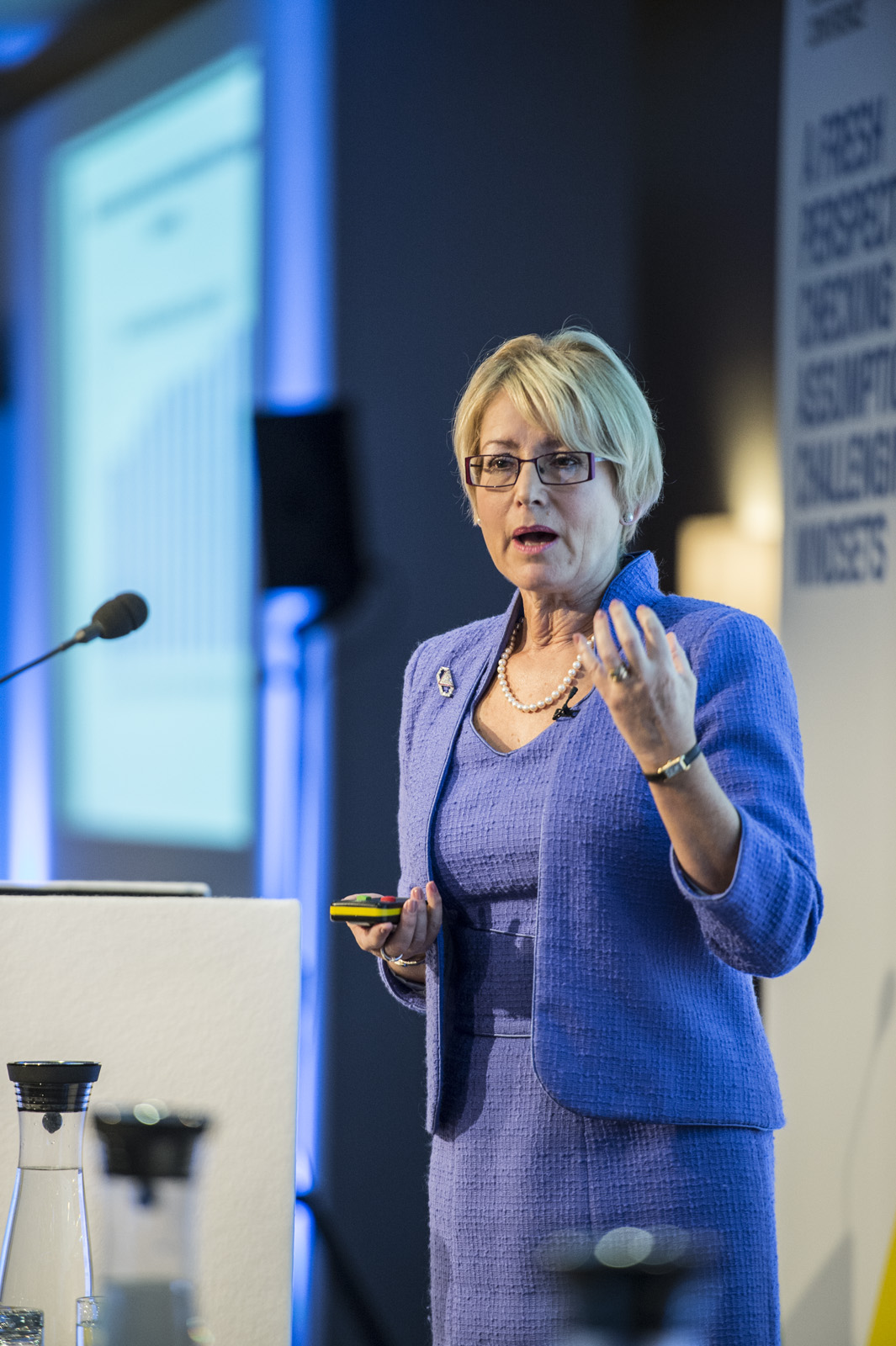
Elizabeth Corley, CEO of Allianz Global Investors, boldly told the audience of investment professionals at the 2014 European Investment Conference that the investment industry doesn’t exist unless customers give it money. Corley challenged the industry to act quickly to change its behaviors so as to be regarded as more trustworthy by its customers.

Corley opened her morning session at the London event by citing Angel Gurría, secretary-general of the Organisation for Economic Co-Operation and Development (OECD): “Trust is the spinal cord of economics. It is a crucial ingredient for finance, successful business, growth, and development.” However, Corley’s emphasis was not on the content of this message but rather that this statement was from 2009 and that, in her eyes, nothing seems to have changed over the past five years, with virtually no resurgence in trust in the industry. She shared the 2013 Edelman Trust Barometer, which reported that the financial services industry was cited as the least trusted industry by the public — even behind the media, which at least cheered the conference’s moderator James Mackintosh of the Financial Times.

Read More

tagged:

Systemic Risk: Is the Investment Profession Part of the Problem or Solution?

By
Robert W. Jenkins, FSIP, is an adjunct professor of finance at the London Business School

Opening the 2014 European Investment Conference in London, Robert W. Jenkins, FSIP, adjunct professor of finance at London Business School, asked if the investment profession is a source of systemic risk or part of the solution.

“Our global financial system is big, is complex, and is accident prone,” said Professor Jenkins, pointing out that a 10% change in holdings by China’s central bank generates $330 billion of sales. A 3% shift in global asset preferences triggers $4 trillion of securities transactions, and adding leverage to the mix amplifies the vulnerability. He stated that “Regulators have failed to erase the lessons of the bubble; leverage remains excessive.” In fact, Jenkins believes that banks’ asset values need only fall by 3% to wipe out their capital under current Basel rules on bank capital adequacy.

Placing the blame for excessive leverage squarely on investment bankers, Jenkins questioned whether the reticence of the investment profession to comment on the fecklessness of many investment bankers has meant that regulators and the general public fail to distinguish between investment banking and investment management. “We missed a golden opportunity both to secure a seat at the reform table and to differentiate ourselves in the process,” said Jenkins.

Read More

tagged:

Video: Will Goodhart on the Issues Facing European Investment Professionals

By

In an interview at the kickoff of the 2014 CFA Institute European Investment Conference in London, Will Goodhart, chief executive of CFA Society United Kingdom, discusses the conference themes, selected speakers, and the issues facing investment professionals in the region.

Goodhart points out that the conference will help to provide answers on where the key risks and returns might be in European markets. Conference speakers will explore geopolitics, regulation, and systemic risk, and the impact these issues may have on markets and market participant behavior in the coming year, he says. Goodhart is looking forward to hearing from the speakers, including Robert W. Jenkins, FSIP, Lord Adair Turner, and Elroy Dimson, among others. He believes investment professionals in the region face many issues that the conference will highlight and offer insight on, including secular stagnation, what is next for bond yields, and the impact of currency on portfolio returns.

———

For Blogs and the Enterprise site


tagged:

Private Wealth Report Shows Surprising Results for Europe’s Investors

By
Euro Coin on 50 Euro Note Map

Europe, long a bastion of old money, dominated headlines in recent years. But not for its wealth. Au contraire. The news centered on the destruction of wealth, the European Sovereign Debt Crisis, and whether the euro would survive.

Gloom and doom abounded. As a 2014 Forbes article put it: “A lot of people expected Europe to implode”. But it didn’t. In fact, European household net wealth grew by an estimated 1.7 percent in 2013 to reach an all-time high of 56 trillion euros, surpassing its pre-crisis high of 54.5 trillion in 2007, according to a new report by Julius Baer, the Swiss private bank.

European private net wealth is expected to rise by 40 percent over the next five years, to 79 trillion euros by 2019. That’s good news for financial advisers, who stand to benefit from this rising tide of wealth.

Most of the growth is expected to come “from the larger economies recovering from recession, but an increasing contribution may also come from peripheral European economies rebuilding some of the wealth they lost since the financial crisis,” the study said.

The inaugural “Wealth Report: Europe” (.PDF) revealed that despite recent concerns about the region’s economic woes, Europe remains one of the wealthiest regions in the world.

The large “core” countries of Germany, France, the UK, and Italy hold over two-thirds of Europe’s total wealth.

Core Europe has the largest number of wealthy households with Germany boasting 1.43 million millionaire households, France 1.33 million, Italy 818,538, and the UK 796,646.

Wealth-per-adult levels were highest in Luxembourg, where the average adult has around 432,221 euros versus the European average of 167,100 euros per adult.

But wealth did not rise everywhere. The wealth-per-adult level in Spain is 92,341 euros. In Greece it is just 58,877 euros.

According to the report, the largest drops in net household wealth since 2007 took place in Spain (-1.4 trillion euros) and Greece (-170 billion euros).

As is case the world over, the wealthiest 10 percent of European households own more than half of the continent’s wealth.

The report shows that the crisis in Europe has created opportunities for private wealth clients and the financial professionals who manage their assets.

At the upcoming European Investment Conference, investment professionals looking to identify future sources of risk and reward for their clients in the region can hear experts discussing the economic forces at work shaping financial markets in the months ahead. You can follow this blog for updates and additional information from the event.


Please note that the content of this site should not be construed as investment advice, nor do the opinions expressed necessarily reflect the views of CFA Institute.

tagged:

Fresh Perspectives for European Investors: Currency, Asset Allocation, and Risk Management

By

The European Investment Conference challenges participants to become agents of change in our industry, by first changing their investment processes, practices, and their own mindsets. With this worthwhile ambition in mind we have prepared a pre-conference reading list from previous CFA Events.

Checking assumptions often means taking a look in the rearview mirror. A summary of the Financial Market History Roundtable, held in London late last year, asks that very question: What are the key lessons of financial market history, and how can investors apply those lessons? Participants including Saker Nusseibeh and Robert Jenkins, FSIP, shared some thoughtful answers. Next on our list, Paul Woolley explores The Fallibility of the Efficient Market Theory: A New Paradigm, seeking answers to what went wrong in recent years and taking a swipe at many investors’ favourite models. In Currency Wars Revisited, James Rickards argues that the Fed’s equilibrium model doesn’t work when economic sectors are highly integrated and points out that the financial system is more integrated than ever before.

Finally, as a precursor to some mind-challenging ideas at our Conference, consider how Thomas M. Idzorek, CFA, in  Evaluating New Methodologies in Asset and Risk Allocation, and Sébastien Page, CFA, in Risk Management beyond Asset Class Diversification, find fresh perspectives to age-old problems – how to allocate assets in uncertain times.

  • Financial Market History Roundtable, London: This article comes from a roundtable held in London at Cass Business School on 11 June 2013, the first of several roundtables on the subject as part of the Future of Finance initiative. With a goal of improving investment decision making in the future, the panel of experts was asked to answer this question: What are the key lessons of financial market history, and how can investors apply those lessons?
  • Currency Wars Revisited: Central banks around the world have tried to stimulate their economies with a coordinated increase in their money supplies but without the destabilizing currency depreciations witnessed in the past. Although the US dollar has depreciated, emerging countries have enjoyed currency appreciation. Despite trillions of dollars added to the US money supply since the financial crisis, growth remains sluggish because people are not borrowing or spending. The Fed’s equilibrium models fail to capture the reality that economic sectors are highly integrated and reliant on the financial sector even more now than before the financial crisis.
  • The Fallibility of the Efficient Market Theory: A New Paradigm: The efficient market theory has failed to explain the market behavior and asset pricing of recent years. A new model that incorporates the principal–agent problem and addresses the dilemma of asymmetric information explains what has previously been unexplainable.
  • Evaluating New Methodologies in Asset and Risk Allocation: Risk parity strategies favor bonds over equities, but they do not necessarily outperform a static portfolio of 60% equity/40% bonds. Portfolio optimization is evolving beyond traditional Markowitz mean–variance optimization to incorporate the higher moments of skewness and kurtosis, which are applicable to alternative investments.
  • Risk Management beyond Asset Class Diversification: Asset allocation is evolving into an approach based on forecasts driven by macroeconomics and risk factor diversification. The dynamic nature of markets requires both secular and cyclical investment horizons. In addition, investors should look beyond volatility as a measure of risk and explicitly estimate the risk of tail events.

You can also follow this blog for updates and additional information from the event.


Please note that the content of this site should not be construed as investment advice, nor do the opinions expressed necessarily reflect the views of CFA Institute.
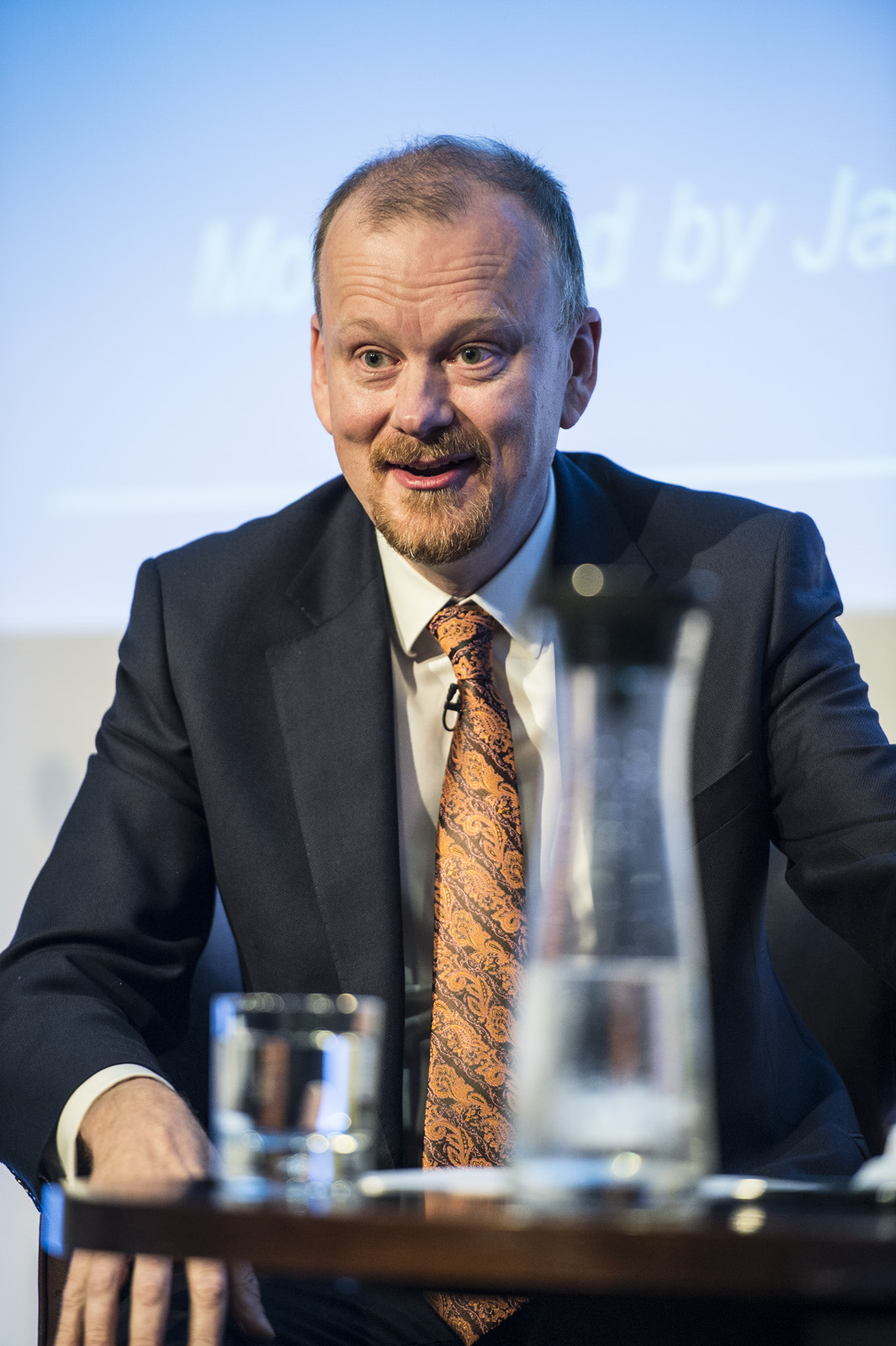
Photo credit: ©iStockphoto.com/Retrorocket

tagged:

Lord Adair Turner Cites Technology as a Driver of Inequality

By
Lord Adair Turner

Inequality is rising within developed and emerging economies, and it is rising on several dimensions, according to Lord Adair Turner, a member of the UK’s Financial Policy Committee and former chair of the UK Financial Services Committee. Lord Turner has noted that the drivers of this inequality are “imperfectly understood,” but he has also suggested that part of the cause might be today’s vast and ever-changing technology and communication developments.

In January, Lord Turner published an article on Project Syndicate that examined the ways that today’s new information technologies, while surely shining indicators of economic growth, also have a dark side effect. The consumer benefits of technology are large relative to their price, but they have brought dramatic shifts in the distribution of wealth for producers.  Read More

tagged:

Video: Lord Adair Turner on the “Hangover of Debt” Weakening Global Economic Recovery

By

Lord Adair Turner is senior fellow at the Institute for New Economic Thinking and former chairman of the UK Financial Services Authority. In this video, he discusses how bank capital and derivatives regulation are not sufficient to avert another global financial crisis, listing three fundamental reasons that continue to put the financial system at risk:


At the 2014 European Investment Conference, he will discuss the ways in which central banks, governments, and regulators must work together to escape the debt overhang that still depresses global economic growth.

You can also follow this blog for updates and additional information about the conference.


Please note that the content of this site should not be construed as investment advice, nor do the opinions expressed necessarily reflect the views of CFA Institute.
tagged: