Currency War III: How Will It Play Out?

By
James Rickards

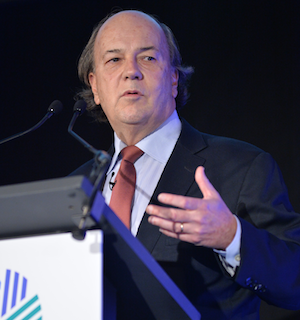
US Federal Reserve Chairman Ben Bernanke may not yet be among them, but a growing number of people seem to acknowledge that the world is engaged in a “currency war,” a term famously used in 2010 by Brazilian Finance Minister Guido Mantega to describe the competitive devaluations being orchestrated by developed nations in their attempts to spark economic growth.

“The world economic system is not always in a currency war, but when it is, it can go on a long time,” warned James Rickards, senior managing director at Tangent Capital Partners, who spoke at the Sixth Annual European Investment Conference in London. “They don’t have a logical resolution but go back and forth until there is an extreme intervention, likely a collapse or a shooting war.”

Read More

tagged:

J.P. Morgan Strategist: World More Balanced Despite Policymaker Actions, Not Because of Them

By
David P. Kelly, CFA

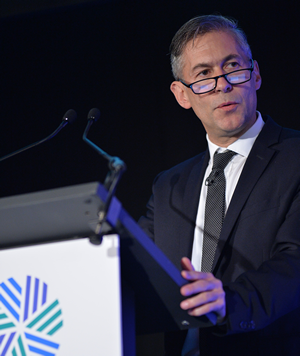
At the Sixth Annual European Investment Conference in London, JP Morgan Asset Management’s David Kelly, CFA, enthusiastically endorsed the idea that the world is becoming more balanced. But he gave very little credit for the improvements to policymakers. With the recovery not yet complete, politicians need to restore investors’ confidence, encourage an entrepreneurial attitude, and stop making Wall Street’s fictitious Gordon Gekko one of the most reviled characters, Kelly argued. An engaging yet controversial theme to his talk was that we should once again celebrate greed as a good thing.

Kelly, the chief global strategist and head of the global market insights strategy team at J.P. Morgan Funds, kicked off his review of the world with Europe, a continent that he believes is showing signs of balance and starting its long trek back to equilibrium, despite weak growth and unemployment. His view: The route is so long that there will be plenty of growth opportunities to be captured by investors along the way.

Read More

tagged:

ECB’s Yves Mersch: Newfound Calm in European Markets Reflects Credibility of Reform Effort

By
Yves Mersch

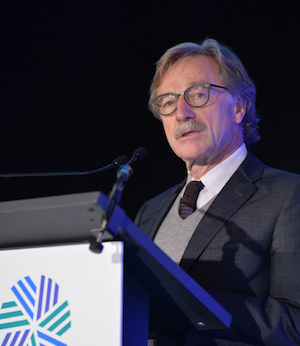
The theme of returning stability and investor confidence in the eurozone underpinned European Central Bank Executive Board Member Yves Mersch’s closing keynote address at the Sixth Annual European Investment Conference in London. According to Mersch, the newfound calm in European financial markets — evidenced by the return of foreign capital flows, declining financial fragmentation among eurozone economies, and the halting of contagion — reflects the credibility of reform initiatives enacted in the wake of the financial crisis.

Mersch began his talk by explaining the original design flaws of European monetary union (EMU) and how recent policy initiatives have sought to address the problems brought about by those flaws. These deficiencies, he contended, included the lack of implementation and enforcement of the Maastricht stability and growth criteria establishing limits on fiscal deficits and government indebtedness; the absence of a mechanism to address macroeconomic imbalances among member states; and the lack of an institutional framework to monitor systemic risks and create a level playing field in the European banking sector.

Read More

tagged:

The Fallibility of Efficient Markets Theory

By
Paul Woolley

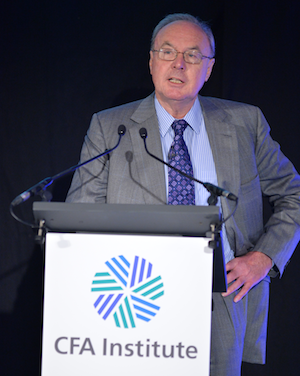
It’s long past time for professional investors to set aside the efficient market hypothesis (EMH) as the basis of most asset management strategies, according to Paul Woolley, a senior fellow at the London School of Economic and Political Science. Noting that earlier, on the first day of the Sixth Annual European Investment Conference, keynote speaker Martin Wheatley had discussed ethics, trust, and governance, Woolley dismissed those issues as secondary to the primary problem — the intellectual framework in which finance is conducted. “I blame the academic theory of efficient markets for the successive crises we’ve had,” Woolley said.

The EMH, he said, assumes that competition results in asset prices that reflect fair value and self-stabilizing capital markets, allowing no room for excess returns for intermediaries. Further, it does not address what Woolley called the “three perversities of investing”: momentum, short-termism, and risk-return inversion. The way forward, according to Woolley, is an asset pricing model that recognizes that investors delegate to agents, and these intermediaries have different degrees of competence and different objectives. This leads to asset mispricing and “rent capture” by agents.

Woolley explained asset pricing as the result of the forces of momentum investing and fair value, or fundamental, investing, noting that most active management represents a combination of the two styles. Woolley sees fund managers following momentum-based strategies in order to improve short-term performance and capture incentive fees. Tight tracking errors, mark-to-market valuation for regulators, and herding are additional explanations for the popularity of momentum. Yet, Woolley said, fund managers’ adherence to tight tracking errors around market capitalization-weighted benchmarks often end up pushing them into high-risk, overpriced securities. Instead, he suggested, benchmarks should be based on underlying fund flows, or GDP plus inflation.

Read More

tagged:

Prospects for the Eurozone: It Won’t Be Germany to the Rescue

By
Kai Konrad

Germany may not be the force that sees the European Union through its political and economic strains, according to Kai Konrad, director of the Max Planck Institute for Tax Law and Public Finance in Munich. At the Sixth Annual CFA Institute European Investment Conference, Konrad painted a picture of troubled states increasingly doubtful of the union’s ability to join in stronger coordination of structural policies, not least because of the wariness of the more robust states toward bailouts and mounting liability risks. This combination of “austerity fatigue” and “rescue fatigue” might very well conspire to create a dark future for the eurozone.

Konrad’s discussion of “austerity fatigue” centered around the well-known sluggishness of many economies in the region but also focused on the less widely acknowledged toll taken on national psyches by external reform pressure. Referencing the Pew Research Center’s May 2013 poll of attitudes within eurozone countries, Konrad cited the majority of respondents in Southern Europe who felt that economic integration had weakened their economies, noting a precipitous drop in support for a more integrated European economy since 2009, in the aftermath of the global crisis. Germany alone had an increase between 2009 and 2013 in the percentage of respondents who felt that economic integration has a positive long-run effect on their home economy. Austerity for the good of the union is increasingly a political liability in many parts of the eurozone.

Read More

tagged:

Survey: CFA Institute Members Concerned about Changing Monetary Policy

By

The expected change in monetary policy is the most important concern for the investment professionals who responded to the survey conducted by CFA Institute. We also asked what respondents expected for the equity risk premium over the coming 12 months and looked at barriers for investment in Africa and the expected developments in the international currency markets over the coming year.

The survey was conducted in October in anticipation of this year’s European Investment Conference. CFA Institute invited 7,000 members in Europe via e-mail to participate. We received 200 valid responses for a response rate of 3% and a margin of error of ±6.8%. The top job functions of respondents are portfolio manager (20%), research analyst (9%), risk manager (9%), strategist (7%), and investment banking analyst (6%). The majority of respondents are located in United Kingdom (20%), Germany (15%), Switzerland (12%), and France (6%).

Let’s look at the survey results in more detail.

Read More

tagged:

Martin Wheatley: Regulation Is Not a Zero-Sum Game (Video)

By

Regulation, according to Martin Wheatley, chief executive at the Financial Conduct Authority (FCA), “is not a zero-sum game, like a tennis match or a football match, where either the regulator wins or the firm wins. If we get regulation right, we all win.” Speaking at the Sixth Annual European Investment Conference today, Wheatley emphasized that the key was to address problems before they incur tremendous cleanup costs. He went on to offer two concrete examples of how the FCA is taking this approach — in the debate over asset management in Europe and in how the regulator deals with wealth managers in the United Kingdom. Watch Wheatley’s full presentation below.


Please note that the content of this site should not be construed as investment advice, nor do the opinions expressed necessarily reflect the views of CFA Institute.

tagged:

“Heart Breaking” and the Future of the Eurozone: Kai A. Konrad on European Convergence

By
Kai Konrad, director at the Max Planck Institute for Tax Law and Public Finance in Munich

Kai A. Konrad, director at the Max Planck Institute for Tax Law and Public Finance in Munich, has made grim predictions about the future of the European Union, giving the euro “a limited chance of survivial” in an April interview with the Telegraph. While Konrad’s remarks were a departure from the official position taken by the German government, his work studying political economy and public economics has given him some unique insights into the ways that individuals and groups interact to achieve their desired objectives.

This is not the first time that Konrad’s views on group incentives and effective motivation have put him at odds with the official policies of Germany and the European Union. In a December 2012 interview with Der Spiegel magazine, he stated that the European Union’s pioneering role on climate protection had been taken up “under the mistaken assumption that other countries would follow.” In Konrad’s opinion, leading by example was the wrong course for Germany and Europe to adopt, because their actions reduced the need for other countries to respond to climate change, essentially “inviting freeloaders.”

Read More

tagged:

One Year Later, Has the German Bubble Grown?

By
One Year Later, Has the German Bubble Grown?

Now that the Deutsche Bundesbank has officially warned of local bubbles in German housing markets, I find the situation to be even more startling than it was when I wrote about it a year ago in a post for the Enterprising Investor. The confluence of risks is extraordinary: Germany, the financial heart of Europe, is vulnerable to a catastrophic failure of the banking system.

Whoa.

That’s right. If interest rates ever rise materially in Germany, the country would likely experience a US-style S&L crisis, in which short-term funding rates for banks (i.e., deposits) exceed the interest earned on mortgages — many of which are fixed-interest-rate loans.

Moreover, Germany has a law that helps homeowners renegotiate rates after 10 years in a mortgage. Homeowners will only renegotiate their payments downwards, and more savings for homeowners means less cash flow for banks.
Read More

tagged:

Enhanced ESG Disclosure and Long-Term Investing in Europe (Video)

By

Steve Waygood, chief responsible investment officer at Aviva Investors, explains the European Commission’s adoption of a proposal to enhance transparency of environmental and social issues and the implications for long-term investing. Waygood is also chairman of the SRI Advisory Committee for Aviva Investors and currently lectures in sustainable finance at Cambridge University’s Programme for Sustainability Leadership.


Read More

tagged: