Investment Professionals in MENA Expect Growth in 2014

By
Dubai skyline

Investment professionals in the Middle East and North Africa (MENA) expect the local economies to grow and think that Saudi Arabia, the United Arab Emirates, and Qatar present the best growth potential and investment opportunities in 2014.

These are the salient findings from a recent survey by CFA Institute. It is the fourth consecutive year that CFA Institute has surveyed its charterholders and members in the MENA region in the run-up to the Middle East Investment Conference. Of the 1,818 finance professionals in 12 countries that were surveyed, 98 responded, for an overall response rate of 5% and a margin of error of ±9.6%. Interestingly, the findings this year are quite similar to the findings last year.

Local economic expansion expected in 2014. Eighty percent of respondents expect their local economies to expand in 2014; 76% expect their businesses to expand; and 67% expect the global economy to expand. In terms of countries with the strongest economic growth and best investment opportunities, Saudi Arabia, the United Arab Emirates, and Qatar came on top, whereas Bahrain, Jordan, Lebanon, and Oman were placed at the bottom. Read More


tagged:

Khaled Sifri’s Insights into Regional Private Wealth and Investment Banking

By
Khaled Sifri

As CEO of Emirates Investment Bank, Khaled Sifri serves the interests of high-net-worth clients and identifies investment banking opportunities. In the case of Middle East Investors, he often finds these two aspects of the business overlap. The new private wealth client, according to Sifri, is an entrepreneur well versed in company growth and attuned to investment banking deals. Sifri seems well-placed to make such an assessment, given his bank’s history of working with clients in the region and its increase in assets under management. Read More

tagged:

Middle Eastern Intelligence from within the Middle East

By
Raghida Dergham

News and geopolitical analyses of the Middle East coming from outside of the region tend to be monolithic: It’s all about the oil. Westerners tend to rely upon sources rooted in the nations in which they live — such as the Council on Foreign Relations in the United States or the Royal Institute of International Affairs in the United Kingdom. Since these organizations set the tone for journalists’ understandings of the Middle East it is rare to read articles on the region that get right the many nuances that are unique to every region and culture on the planet.

Enter: Raghida Dergham, founder and executive chairman of the Beirut Institute, and columnist and senior diplomatic corrrespondent for Al Hayat, a leading Arabic daily news source. Even writing for an independent news source, Dergham provides a native’s outsider voice. Take for example a recent call out of US president Barack Obama on his lack of a policy in Syria in which she stated, “So it is time to recognize that the policy of attrition, exhaustion, and mutual destruction in Syria has failed miserably, and instead resulted in a tragic disaster for Syria and its people.”

Read More

What Will Drive Economic Growth in the Middle East?

By
What Will Drive Economic Growth in the Middle East?

Oil and energy are topics that have historically dominated investment discussions in the Middle East/North Africa (MENA) region, but a unique combination of forces is changing conversations about the region’s future. As CFA Institute prepares to hold the 5th Annual CFA Institute Middle East Investment Conference in Jordan on 9–10 April, an increasing number of MENA investors are viewing entrepreneurs as new drivers of the region’s economic growth.

Success stories such as Maktoob, the Arab internet portal acquired by Yahoo! For $164 million, give tech-savvy entrepreneurs something to aspire to, while services such as Wamda.com, Jordan’s Oasis500 and Silicon Badia, and SeedStartup in Dubai help evaluate potential business ideas at an early stage. Other factors — like the region’s youth unemployment rate of 25%, which, according to a 2012 IMF report, exceeds that of any other region in the world — contribute to an environment where motivated individuals are finding the means to carve out their own path to success. Read More

tagged:

How the Middle Ages Handled “Too Big to Fail”

By
Adrian R. Bell, chair in the history of finance and head of school at ICMA Centre, Henley Business School

It’s the recipe for a financial crisis: A new product exploits a gap in regulations to meet the needs of the marketplace. As this product becomes more popular, hidden risks build up in the financial system. When a disruptive event triggers a market shock, the hidden risks are revealed to be a systemic weakness, crippling major financial institutions that were caught unprepared.

This could be the story of the credit default swaps that played a central role in the 2008 global financial meltdown, but according to Adrian R. Bell, chair in the history of finance and head of school at ICMA Centre, Henley Business School, this is a pattern that has been playing out in markets for at least 700 years. Read More

tagged:

Volker Nienhaus on Turning Islamic Banking into a Competitive Advantage

By
Volker Nienhaus, visiting professor at Henley Business School at the University of Reading

Islamic banking continues to be a growing sector in the global financial marketplace, with US$1.4 trillion in Islamic financial products traded in 2013, and an expected trading volume of more than $2 trillion in 2014. However, Islamic banking must operate within the constraints of Sharī`ah law — under its purest interpretation, all risks, profits, and losses must be shared equitably among counterparties.

Some financial institutions view Islamic law’s restrictions as a competitive disadvantage, preventing them from offering interest-bearing instruments or engaging in speculative practices. Financial institutions attempting to cope with this disadvantage have led to an ongoing debate over the form versus the substance of products that claim compliance. Read More

tagged:

Theo Vermaelen: Beating the Market through Share Buybacks

By
Theo Vermaelen, professor of finance at INSEAD

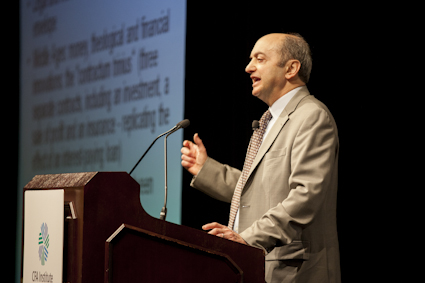
The “buyback anomaly” is a global phenomenon whereby long-term investors can generate significant alpha through a structured investment strategy, says Theo Vermaelen, professor of finance at INSEAD, during the recent CFA Institute Middle East Investment Conference. Vermaelen gave an analysis of the U.S. market and provided insight on how, when, and which companies can maximize their returns using buybacks.

Vermaelen explained that there are four primary ways to buy back shares. In a fixed-price tender offer and a Dutch auction tender offer companies typically would have to pay a premium to buy back shares and so these types of transactions are rarely used. The private repurchase method is used when a large shareholder wants to sell their shares and approaches the company. The most common and widely used buyback method is the open market repurchase. In an open market repurchase, when a company announces it will buy back its share, it does not translate into a firm commitment on the company’s end, and there is no premium to be paid.

Vermaelen says that in recent years the buybacks in the rest of the world started catching up with the United States because of changes in regulation and tax laws that provided greater shareholder value. But he believes the most important reason is the adoption of executive stock option plans.

Read More

tagged:

Islamic Finance is Growing Fast but Faces the Form-Versus-Substance Debate

By
Ibrahim Warde, adjunct professor of international business at the Fletcher School of Law and Diplomacy at Tufts University

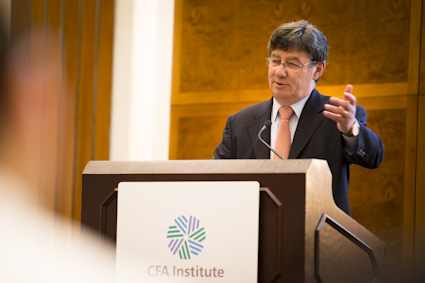
Speaking at the Fourth Annual CFA Institute Middle East Investment Conference in Dubai, Ibrahim Warde, adjunct professor at Tufts University in the United States and a noted author on Islamic finance, argued that since the 1990s, Islamic finance has gained much more international acceptability but that it continues to grapple with the fundamental form-versus-substance debate.

With the current size of the Islamic finance market at over 1.3 trillion U.S. dollars, Warde believes “it is not an exaggeration to say that in the world of finance, the fastest growing segment is Islamic finance.” The data he shared showed that assets of the Islamic financial sector grew by 21% in 2006, 29% in 2007, 16% in 2008, 18% in 2009, 22% in 2010, 20% in 2011, and an estimated 24% in 2012. He said that in some markets, such as Malaysia, Islamic finance has appeal beyond Muslims; many non-Muslim Malaysians, of Chinese and Indian origin, are both customers and staff of Malaysian Islamic financial institutions.

Historically, Warde explained, religion has had much to do with finance, and all three Abrahamic faiths — Judaism, Christianity, and Islam — have had somewhat similar teachings on finance. Also, some secular perspectives, such as that of Aristotle, have also considered money to be sterile and “making money from money” (that is, without asset and enterprise) as problematic. He was of the view that in the heyday of conventional finance, prior to the financial crisis, ideas such as the role of religion in finance and any alternative financial system were considered needless. He added that the crisis has exposed the weaknesses of the current financial system and there has been “public outrage over excesses and support for more conservative and ethical finance.”

Read More

Peter Zeihan: The World Should Watch Out for a Shift in U.S. Foreign and Economic Policy

By
Peter Zeihan, geopolitical analyst

At the CFA Institute Middle East Investment Conference held in Dubai on 20–21 March, Peter Zeihan, an expert in international politics, economics, and energy gave us his insights on geopolitical factors emerging on the global stage. In particular, Zeihan focused on the United States, which he believes could have a direct and substantial impact on investment strategies for the Middle East.

A central theme in Zeihan’s thesis was a perceived shift in U.S. foreign and economic policy based on the gradual realisation that through the United States’ energy supply chain in Canada, and its increasing production of shale oil, North America has the capacity to become energy self-sufficient by 2020.

Statistics shared with an increasingly intrigued audience included:

  • 50% of all natural gas as produced in the United States is from shale oil
  • Texas supplies 25% of Mexico’s natural gas and this will rise to 50% in the next five years
  • New York has moved from zero natural gas usage a year ago to using nine billion cubic meters today — in the space of 12 months (a consumption greater than Belgium’s)

Read More

tagged:

Avinash Persaud: Who Will Win the Currency Wars?

By
Avinash Persaud, chairman at Intelligence Capital Limited

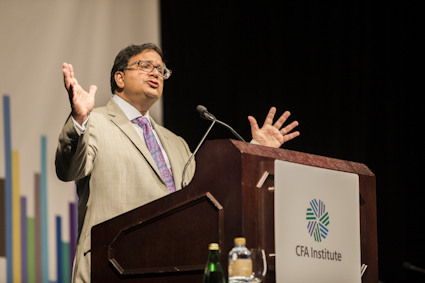
“Who will win the currency wars — the Americans or the Chinese?” asks risk expert and chairman at Intelligence Capital Limited, Avinash Persaud, at the CFA Institute Middle East Investment Conference. Currency wars, such as the “beggar-thy-neighbour” policies of the 1930s, might be thought of as domestic responses to domestic problems, but Persaud argues they are actually undeclared phoney wars on other countries with serious implications.

“Devaluation provides no long-term solution,” said Persaud. The same countries deploying the devaluation weapon also have the smallest manufacturing export sector and, when faced with difficulties, have elected to devalue. In contrast, the euro has forced countries to make decisions they have been deferring for too long. Decision makers on policy and their policies matter. “People on the sell side underestimate importance of policy and neglect the implications of policy,” he added.

Persaud believes we are facing an age of volatility. In this new age, currency management becomes more costly and more important to returns. “The strongest economies in the world are those with the lowest interest rates,” said Persaud, “What drives currency is not growth or interest rates; it is inflation.” He stated that the key policies that matter are those that contribute to low inflation and how inflation divides up the cake between creditors and debtors. Inflation is highly political, determining the allocation of wealth in a country.

Read More

tagged: