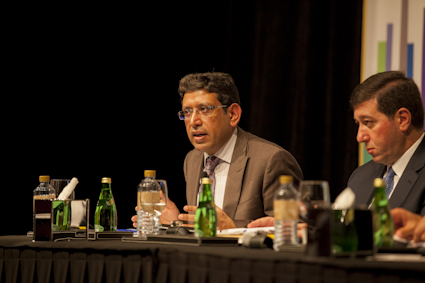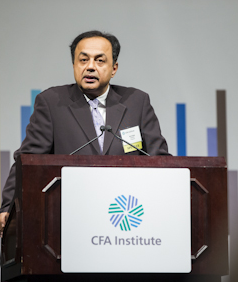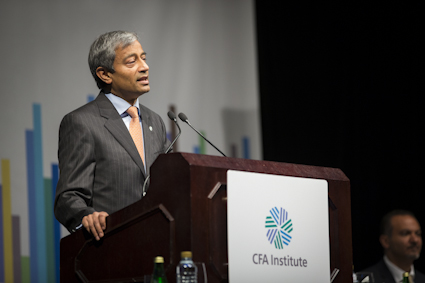
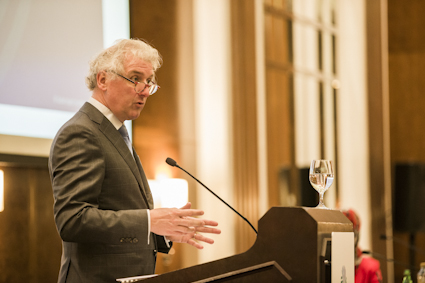
All investments can have a positive impact on society and the environment, but what distinguishes impact investments is their disclosed intention to make a positive impact and the fact that their impact is measured. This is how Dr. Harry Hummels, professor of ethics, organisations, and society at Maastricht University and managing director at SNS Impact Investing, explained impact investing to an attentive audience of investment professionals at the CFA Institute Middle East Investment Conference in Dubai on 20–21 March 2013.
Dr. Hummels stated that impact investments are “made into companies, organisations and funds with the intention to generate measurable social and environmental impact alongside a financial return. They can be made in both emerging and developed markets, and target a range of returns from below market to market rate.”
He emphasised that impact investing is not philanthropy; it is about making both a financial return and a positive impact. This is why it is not confined to religious foundations and charities but is also appropriate for institutional investors, like pension funds and insurance companies, seeking competitive returns. Some of the recurring sectors invested in are agriculture, microfinance, renewable energy, small and medium enterprises (SMEs), healthcare, green real estate, and community development. Some of the recurring asset classes are private equity, venture capital, private debt, and real estate. Having said that, he clarified that impact investing is also not confined to any particular investment sector or asset class.