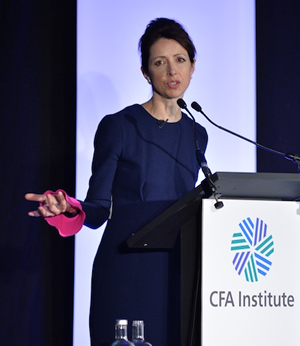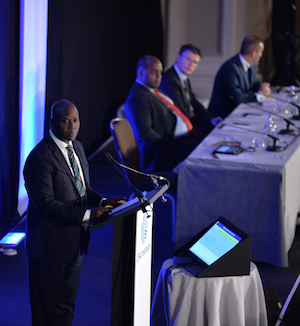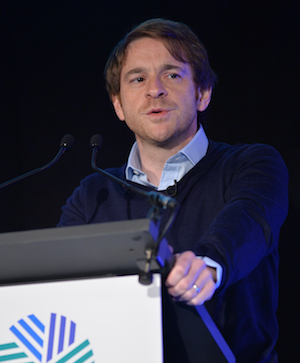

Hideous Opportunity Sets and Foie Gras Markets: Observations from James Montier

By
James Montier

The CFA Institute European Investment Conference is a focused, interactive conference for Europe’s leading investment professionals. The 2017 CFA Institute European Investment Conference will bring portfolio managers, analysts, chief investment officers, and CEOs together in Berlin on 16–17 November.

James Montier, a member of GMO’s asset allocation team, is a value investor who uses behavioral finance insights to guide his investment strategy. His observations on financial markets — including the “Seven Immutable Laws of Investing” that he has applied to analyze markets around the world — combine vivid imagery with blunt commentary on investor behavior. The markets have given him a lot to talk about: Read More


tagged:

Video: Philippa Malmgren on Mispriced Risks and Military Near Misses

By

Philippa Malmgren is president and founder of DRPM Group. She also serves on the British Ministry of Defence Working Group on Global Strategic Trends and the Greater London Authority Infrastructure Advisory Group. In this video, she explains the link between central bank efforts to create inflation and the “near misses” between the military forces of the US, Russia, and China:


At the 2014 European Investment Conference, she will discuss why the return of geopolitics is not random and how today’s investment strategies should not be shaped by yesterday’s understanding.

You can also follow this blog for updates and additional information about the conference.


Please note that the content of this site should not be construed as investment advice, nor do the opinions expressed necessarily reflect the views of CFA Institute.

tagged:

Checking Assumptions and Challenging Mindsets: A Crucial Investment Strategy

By

Six years after the 2008 global financial crisis, have the attitudes and fascinations of the finance sector changed? Financial scandals involving foreign exchange and Libor rates are fresh in UK memory, and a growing number of politicians and business leaders are voicing increasingly nationalistic concerns, with a near tangible disconnect between “finance types” and the man on the street. At first glance, few lessons seem to have been learned.

But scratch the surface, and faint glimmers of hope appear. Read More

tagged:

Video: Amlan Roy Explains Why Global Demographics Matter (More than You Might Think)

By

Amlan Roy is managing director and head of global demographics and pensions research at Credit Suisse Securities (Europe) Limited. In this video, he explains that global demographics have been misunderstood, misinterpreted, and misapplied by macroeconomists, investors, practitioners, and actuaries: Read More

tagged:

Video: Why Delegates Attend the European Investment Conference

By

At the 2013 European Investment Conference, members of the financial services industry gathered to discuss challenging issues and to gain a comprehensive view of the forces shaping their world. Some of them shared their perspective with CFA Institute, explaining what drew them to the conference. Watch this short video to learn why delegates attend, and what they gained from the event:


Please note that the content of this site should not be construed as investment advice, nor do the opinions expressed necessarily reflect the views of CFA Institute.

tagged:

Varietals for the Long Run? Wine Investments May Outperform Artwork and Bonds

By
Elroy Dimson

The CFA Institute European Investment Conference is a focused, interactive conference for Europe’s leading investment professionals. The 2017 CFA Institute European Investment Conference will bring portfolio managers, analysts, chief investment officers, and CEOs together in Berlin on 16–17 November.

It has been a difficult time for asset managers in search of investment returns. In June 2014, European Central Bank President Mario Draghi first announced a negative deposit rate for the ECB, and some industry observers have been warning of a crisis facing fixed-income investors. Against this backdrop, it may be appropriate to seek solace in alcohol — as an investment strategy.

According to Elroy Dimson, emeritus professor of finance at London Business School, wine investments have yielded some of the best returns of the 20th century. In “The Price of Wine,” Dimson and his co-authors analyzed a dataset of 36,000 prices from 1900 to 2012 and found that annualized real returns for wine investments exceeded returns on art, stamps, and even government bond investments over the same time period. Although equities delivered the highest return over the period in Dimson’s study, his findings raise interesting questions about what it means to have a diversified portfolio. Read More

tagged:

Registration Open: 2014 European Investment Conference

By

Registration is now open for the 2014 European Investment Conference, held in London on 16–17 October. The conference, which will re-assess common industry practices, reevaluate and challenge perceptions, and identify opportunities for investment innovation, includes the following speakers:

  • Lord Adair Turner, member of the UK’s Financial Policy Committee and the House of Lords, and former Chairman of the United Kingdom’s Financial Services Authority.
  • Elizabeth Corley, CEO at Allianz Global Investors and non-executive director on the Financial Reporting Council.
  • Amlan Roy, managing director and head of global demographics and pensions research at Credit Suisse Securities (Europe) Limited.
  • Philippa Malmgren, president and founder of DRPM Group.

Last year’s event included sessions on the eurozone and frontier markets, an update from J.P. Morgan Funds’ chief global strategist David Kelly, CFA, and an address from European Central Bank Executive Board Member Yves Mersch.

The 2014 European Investment Conference, brought to you by CFA Institute and CFA Society of the United Kingdom, will include interactive sessions with renowned international experts to provide a holistic view of macro-economic issues for senior professionals. Specialist workshops led by respected practitioners will also provide practical tools and insights that practitioners can take back to the office.


Please note that the content of this site should not be construed as investment advice, nor do the opinions expressed necessarily reflect the views of CFA Institute.

Investment Professionals: How Socially Useful Are You?

By
Helena Morrissey

The CFA Institute European Investment Conference is a focused, interactive conference for Europe’s leading investment professionals. The 2017 CFA Institute European Investment Conference will bring portfolio managers, analysts, chief investment officers, and CEOs together in Berlin on 16–17 November.

Helena Morrissey, founder of the 30% Club, an initiative aimed at achieving 30% female representation on UK corporate boards, challenged the audience at Sixth Annual CFA Institute European Investment Conference in London to step up and make their voices heard in areas where many professionals may be considered to have either not paid close attention before — or simply felt it was not their place to comment.

In a discussion that complemented the Future of Finance initiative at CFA Institute, a long-term global effort to shape a trustworthy, forward-thinking financial industry that better serves society, Morrissey addressed the question of “How socially useful are investment professionals?” Her initial diagnosis is that the investment profession plays a crucial role in society; by their very nature, practitioners have a direct impact on people’s retirement security and their quality of life. Although the vast majority of investment professionals strive to serve their clients to the best of their abilities, there remains much room for improvement not only in the way that business is conducted, but also in the way that the profession engages with society as a whole — and seeks to educate individuals about what they actually do.

Read More

tagged:

Fear of Investing in Africa Is Losing You Money

By
Emerging Markets — Spotlight on Africa

Africa has its challenges, from corruption to political risk, yet the continent has changed and will continue to evolve. And once investors consider the impressive facts about the growth and transformation of Africa’s economies, their fear and pessimism about investing there should dissipate. Those were the key messages that emerged from a panel discussion entitled Emerging Markets — Spotlight on Africa, moderated by Bloomberg Television’s Manus Cranny, at the Sixth Annual CFA Institute European Investment Conference in London.

Speaking first, Charles Robertson, global chief economist at Renaissance Capital, highlighted the change theme. His view is that GDP growth knows no barriers, be they climate or ethnicity. Nobody expected the growth that China and India have experienced, and he argued that, in similar fashion, Africa’s GDP will cover a lot of distance in catching up with the rest of the world. Ten African countries have achieved at least 7% annual growth since 2000, he noted, enough to double GDP in about a decade. This growth is the result of public and private sector debt, increasing foreign direct investment, favorable demographics, rising education, and reforms that have made doing business easier.

Read More

tagged:

Three Decades of Financial Engineering by Central Bankers Have Yielded “Age of Financialization”

By
Dylan Grice

At the Sixth Annual CFA Institute European Investment Conference in London, Dylan Grice, director of research at Edelweiss Holdings, delivered a sober assessment of the state of the economy after three decades of financial engineering by central bankers around the globe. Grice’s periodic thought pieces are both widely read and quoted, and his most recent essay, titled “The Language of Inflation” (PDF), carried a message similar to the one that Grice delivered at the conference: While the US Consumer Price Index (CPI) and other government-generated inflation measures indicate that price inflation has been tamed, central bankers have created inflation of a different sort — credit inflation — which has devalued money and ushered in an “age of financialization” that has contributed to a devaluation of language.

Grice cited Bernd Widdig, author of Culture and Inflation in Weimar Germanywho wrote, “Next to language, money is the most important medium through which modern societies communicate.” Using Google’s Ngram Viewer, which charts word usage in books published since 1600, Grice demonstrated how words like “leveraged” and phrases like “right now” have spiked since the 1980s and are emblematic of how society has come to devalue patience and thrift.

Read More

tagged: